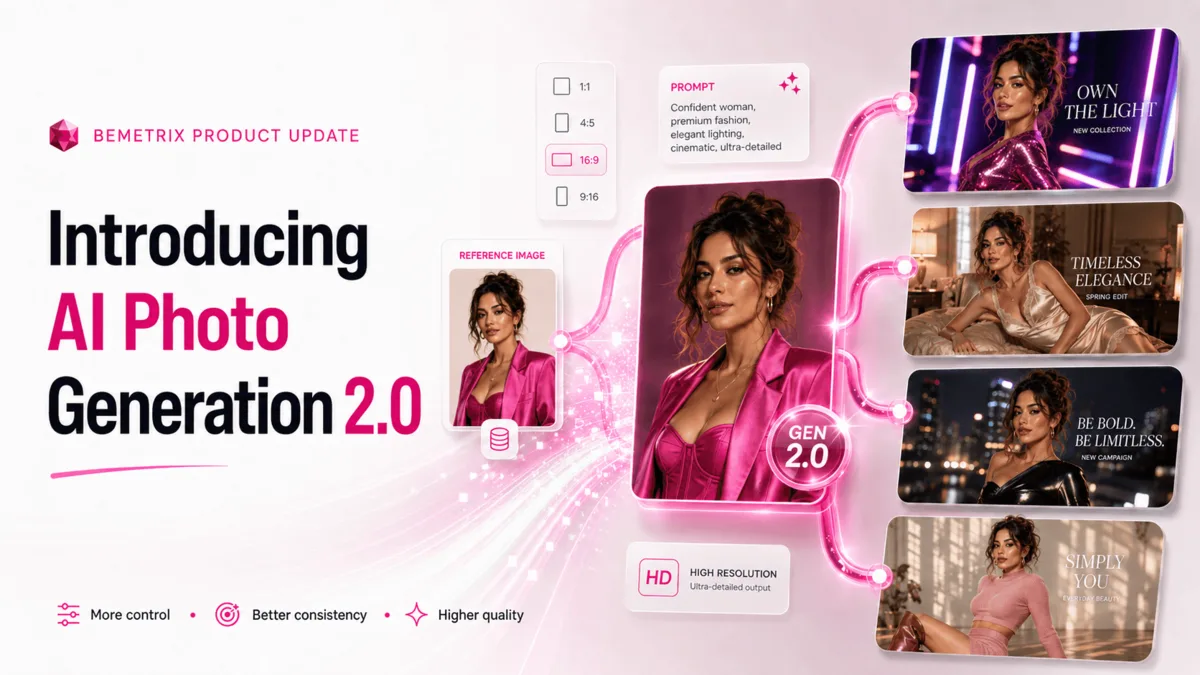
Why we built a style-first generator
The first version of our AI profile tooling did one thing: produce a promotional image from a short prompt. It worked, but the results drifted. Two creators on the same team could end up with visuals that looked like they belonged to different brands, and refining a result meant rewriting the prompt from scratch.
The update changes the starting point. Instead of a blank prompt, generation begins with an explicit style choice, so the output is consistent by default and prompts become refinements rather than the whole instruction.
What is new
Style selection before generation
Choose a visual direction up front. The style sets lighting, tone, and framing conventions, which makes results predictable across a roster — useful when a studio wants profile imagery that looks like it came from one brand rather than five.
Profile copy alongside images
The generator also drafts profile text. Copy and imagery produced together tend to match in tone, which matters more for conversion than either asset does on its own. Everything generated is a draft: review it, edit it, and keep the parts that sound like the creator.
Clear usage limits
AI usage is tied to the plan, and the interface shows where you stand before you spend a generation rather than after. When a plan's allowance is exhausted, you get an explicit prompt with the options — not a silent failure.
How to get good results
- Start from the style, then adjust. Change one variable at a time; wholesale prompt rewrites make it impossible to learn what worked.
- Generate in batches, choose ruthlessly. Selection matters more than prompt cleverness.
- Keep a house look. Pick one or two styles per brand and reuse them. Consistency reads as professionalism.
- Always review before publishing. AI output is a first draft. A human decides what represents the creator.
Availability
Style selection is available to accounts with AI features on their plan, for both studio and solo workspaces. Usage counts against the plan's AI allowance, and higher plans include a larger multiplier.

Related articles
Get more like this in your inbox
Industry insights, best practices and product updates — once a week.